
How Oregon compares
Ranked against the other 49 states on the figures we hold. Rates that combine state and local components — sales tax, the minimum wage where it varies by region — are shown on this page but not ranked, because a single number would misstate them.
| Figure | OR | Nationally | In its region |
|---|---|---|---|
| PopulationUS Census Bureau, 2023 | 4,240,137 | 27th highest of 50 | 4 of 11 |
| GDP ($bn)Bureau of Economic Analysis, 2023 | 299 | 24th highest of 50 | 4 of 11 |
| Median household incomeUS Census Bureau, 2023 | $77,201 | 14th highest of 50 | 7 of 11 |
| Unemployment rateBureau of Labor Statistics, 2025 | 3.8% | tied 32nd lowest of 50 | 6 of 11 |
| Foreign-born shareUS Census Bureau, 2023 | 10.1% | 19th highest of 50 | 6 of 11 |
| Property tax rateconfirm with the Oregon legislature | 0.82% | tied 22nd lowest of 50 | 9 of 11 |
| Deposit return window (days)confirm with the Oregon legislature | 31 | 42nd lowest of 50 | 11 of 11 |
| Eviction notice (days)confirm with the Oregon legislature | 72 | 1st highest of 50 | 1 of 11 |
| Final pay deadline (days)confirm with the Oregon legislature | 0 | tied 1st lowest of the 30 states that set one | 1 of 5 |
- State income tax: yes41 of 50 states answer the same way
- At-will employment: yesthe same in all 50 states — it does not set Oregon apart
- Paid sick leave required: yes20 of 50 states answer the same way
- Paid family leave: yes13 of 50 states answer the same way
- Workers' comp required: yes49 of 50 states answer the same way
- Rent control permitted: yes4 of 50 states answer the same way
- Annual report required: yes46 of 50 states answer the same way
Statistical figures: US Census Bureau (2023) · Bureau of Economic Analysis (2023) · Bureau of Labor Statistics (2025) · Small Business Administration (2023). Tax, wage, business and tenancy figures are recorded from state sources without a per-figure date — confirm anything you are about to act on with the Oregon legislature.
How long you have in Oregon
The periods that decide whether something is on time. Days are calendar days unless the underlying rule says otherwise.
- Return a security deposit within
- 31 days
- Eviction notice before filing
- 72 days
- Final paycheck within
- 0 days
- LLC formation processed in
- 3–5 days
- Annual report due
- Annually by the anniversary month of registration
- Overtime starts after
- 10 hrs/day or 40 hrs/week
AI Legal Insights — Oregon
AI-generated · Updated July 2026
Oregon operates under an at-will employment doctrine, but it is heavily influenced by robust worker protection statutes and<pad><pad> enacted through the Oregon Legislature. The state is notable for its comprehensive paid leave laws and strict consumer protection regulations enforced by the Department of Justice.
Oregon offers a dynamic economy driven by the technology, manufacturing, and agricultural sectors, particularly in the Silicon Forest region. While the state lacks a sales tax, businesses must navigate a progressive income tax structure and specific labor requirements like the Oregon Sick Time Law.
Oregon is known for its progressive stance on immigrant rights, including various state-level protections and a significant foreign-born population of 10.1%. While USCIS<pad> handles federal matters, the state provides various resources to support integration and legal services for its diverse immigrant communities.
- ›Ensure compliance with the Oregon Workplace Fairness Act when drafting non-disclosure and non-disparagement clauses.
- ›Verify that all employment contracts account for the specific<pad> requirements of the Oregon Paid Leave law.
- ›Include clear choice-of-law provisions, as Oregon courts strictly interpret local consumer protection and wage-and-hour statutes.
AI-generated insights · Verify with a licensed attorney before relying on this information.
🔍 What documents do you need in Oregon?
Select your situation — get instant recommendations tailored to Oregon law.
Employment Laws
Oregon labor regulations
Oregon has some of the strongest worker protections in the Pacific Northwest. The Portland metro minimum wage is $17.70/hr (2024), while the statewide standard is $15.45/hr. Oregon has both daily overtime rules (10 hrs/day for manufacturing) and weekly rules. The Oregon Family Leave Act (OFLA) and new Paid Leave Oregon program (launched 2023) provide robust leave protections. Oregon Sick Time Law requires paid sick leave for all employers with 10+ employees.
| Law | OR Rule | Federal Floor |
|---|---|---|
| Minimum Wage | $15.45/hr statewide; $17.70/hr Portland metro; $14.20/hr nonurban counties (2024) | $7.25/hr |
| Overtime | After 10 hrs/day (manufacturing) or 40 hrs/week at 1.5× rate | FLSA: after 40 hrs/week only |
| Paid Sick Leave | 1 hr per 30 hrs worked; up to 40 hrs/year; paid for employers with 10+ employees | None (federal) |
| Paid Family Leave | Paid Leave Oregon: up to 12 weeks paid at 60–100% of wages (2023); funded by employee/employer payroll contributions | FMLA: 12 weeks unpaid |
| Workers Comp | Mandatory for all employers with employees | Federal employees: yes |
| At-Will Employment | Yes, with significant statutory exceptions | Default nationwide |
| Final Paycheck | Immediately upon termination by employer; next business day if employee quits with notice | Next regular payday |
| Meal Breaks | 30-minute unpaid meal break after 6 hours; 10-minute paid rest per 4 hours | No federal requirement |
- Paid Leave Oregon (launched September 2023) provides up to 12 weeks of paid leave at 60–100% of wages for qualifying family, medical, or safety leave — funded by employee and employer payroll contributions.
- Oregon's rent stabilization law (enacted 2019) caps annual rent increases at 7% plus the Consumer Price Index for buildings 15 years or older — the first statewide rent stabilization law in the US.
- The Oregon Equal Pay Act (2019) requires equal pay for work of comparable character and restricts employer use of salary history.
- Oregon's Predictive Scheduling Law (in Portland and statewide for large employers) requires advance notice of work schedules and compensation for last-minute changes.
- The Oregon WARN Act requires 60-day advance notice for plant closings or mass layoffs affecting 50+ employees.
- Final paycheck rules are strict — employers who terminate must pay immediately; failure to do so triggers penalty wages of 8 hours/day up to 30 days.
Sources: U.S. Department of Labor · NCSL 2025 · State labor agency
Landlord-Tenant Laws
Oregon rental regulations
Oregon has enacted some of the most progressive tenant protections in the nation. In 2019, Oregon became the first state to enact a statewide rent stabilization law, capping annual increases at 7% + CPI for units 15+ years old. Portland and other cities have additional local protections. Non-payment evictions require a 72-hour notice, while no-cause evictions for tenants with 12+ months of tenancy require 90 days' notice. Security deposits have no statutory cap but must be returned within 31 days.
| Topic | OR Rule |
|---|---|
| Security Deposit | No statutory cap; must be returned within 31 days of move-out with itemized deductions |
| Deposit Return | Within 31 days of lease termination; written itemization required for any deductions |
| Rent Control | Statewide rent stabilization (2019): annual increases capped at 7% + CPI for units 15+ years old; exemptions for new construction |
| Eviction Notice (Non-Payment) | 72-hour notice to pay or vacate for non-payment of rent (first occurrence); 144-hour notice in some circumstances |
| No-Cause Eviction | Tenants with 12+ months of tenancy: 90-day written notice required; no-cause eviction prohibited after 12 months in some jurisdictions |
| Habitability | Implied warranty of habitability; tenant may give 24-hour notice for emergency repairs or 7-day notice for others, then terminate or repair-and-deduct |
| Retaliation Protection | Strong anti-retaliation law — landlord may not raise rent, reduce services, or evict within 90 days of tenant exercising legal rights |
| Late Fee | Capped at 5% of monthly rent; must be specified in the lease; 4-day grace period before late fee can be assessed |
Both landlords and tenants have enforceable rights under Oregon law. Document all communications and keep copies of your lease agreement. Use AI review to spot risky clauses before signing.
Starting a Business
Oregon LLC formation guide
Oregon has no sales tax — a major advantage for retail and direct-to-consumer businesses. However, the state's income tax (up to 9.9%) is one of the highest in the nation, and the Corporate Activity Tax (CAT) applies to businesses with over $1M in Oregon commercial activity. Portland metro has additional local taxes (Arts Tax, Metro SHS). LLC formation costs $100 with a $100 annual renewal. Oregon's technology sector, particularly in Hillsboro (Intel, Nike) and Portland, drives significant economic activity.
Step-by-step LLC formation
- 1Choose a business name — must include "LLC", "L.L.C.", or "Limited Liability Company"; check availability at sos.oregon.gov
- 2File Articles of Organization with the Oregon Secretary of State online at sos.oregon.gov/business
- 3Pay the $100 filing fee
- 4Designate a registered agent with a physical Oregon address
- 5Get an EIN from the IRS — free at irs.gov; required for banking, hiring, and tax registration
- 6Register for Oregon taxes with the Oregon Department of Revenue (oregon.gov/dor) — includes withholding tax, and Corporate Activity Tax if applicable (businesses with $1M+ Oregon gross receipts)
- 7File the annual renewal by the anniversary month of registration — $100 fee at oregon.gov/sos
- 8Comply with Paid Leave Oregon contribution requirements — employer contributions required for companies with 25+ employees
- 9Check Portland-specific requirements: Arts Tax registration, Metro SHS employer withholding if operating in the Portland metro area
Every LLC also needs a free EIN from the IRS (Form SS-4). Apply online at irs.gov — takes about 15 minutes and is required to open a business bank account.
Popular IRS Forms
Most-filed federal forms for Oregon taxpayers
Fill these out online with plain-English guidance — every field explained, no accountant required. Download as a ready-to-file PDF when done.
The main annual federal income tax return every taxpayer files.
Fill out free →Give your SSN or EIN to a client before getting paid as a contractor.
Fill out free →Report $600+ paid to independent contractors during the year.
Fill out free →Tell your employer how much federal tax to withhold from pay.
Fill out free →Report income and expenses from a sole proprietorship or LLC.
Fill out free →Report payroll taxes withheld from employees each quarter.
Fill out free →Get an automatic 6-month extension to file your 1040.
Fill out free →The year-end wage statement employers issue to each employee.
Fill out free →Review Your Oregon Contract — Free
Upload any document. Our AI flags risky clauses, explains legal jargon, and gives you a plain-English risk report specific to Oregon law.
Federal Offices
United States government offices in Oregon
Walk-in assistance by appointment only. Call (844) 545-5640 to schedule, or book online at irs.gov.
Immigration appointments via my.uscis.gov or call (800) 375-5283.
Free Legal Aid
Oregon legal assistance organizations
These organizations provide free or reduced-cost civil legal services to qualifying Oregon residents.
Free civil legal services for low-income Oregonians
Legal aid for rural and agricultural workers in Oregon
Before your consultation: upload your document for a free AI risk scan — understand the key issues before meeting an attorney.
Free AI contract review →Latest Tax & Business News
Check these official sources for latest Oregon tax & business news:
Upcoming Deadlines
Forms on BrieflyGo
Business Resources
Top Oregon Cities
Localized legal, tax & contract help for each city.

Got a Oregon government document?
Upload it — AI reads and explains every line in plain English.
BrieflyGo Tools for Oregon
AI-powered legal and tax tools — free to start, no login required.
 Free
FreeUpload any contract — AI highlights risks, explains every clause in plain English, and suggests fixes in seconds.
Review free →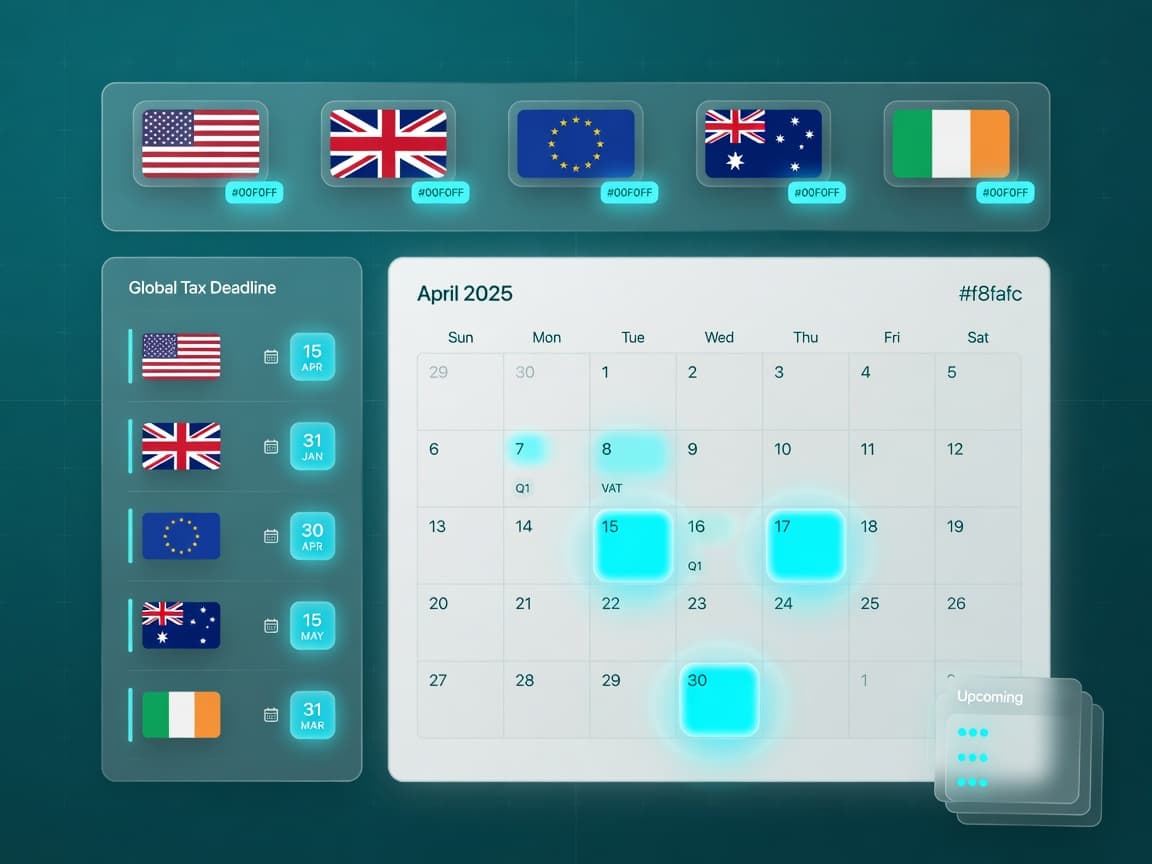
Federal + state deadlines in one place. Never miss a quarterly payment or filing date again.
Open calendar →
NDA, lease, employment contracts and 200+ more. AI pre-fills from your details — ready in minutes.
Browse templates →
IRS 1040, 1099-NEC, W-9, USCIS forms — search the full catalog, fill online, download as PDF.
Find forms →Common Questions
Oregon legal & business FAQ
Review Your Oregon Contract — Free
Upload any document. Our AI flags risky clauses, explains legal jargon, and gives you a plain-English risk report specific to Oregon law.