High-risk business clause | Contract risk guide
Assignment Clause: Risks, Examples, and How to Detect Them
This guide explains assignment clause in plain English so you can spot red flags fast - even if you're not a lawyer. Use it to scan your contract, find the wording, and know what to negotiate.
Direct answer
The assignment clause dictates which party gains ownership or rights over intellectual property, assets, or deliverables defined in the contract. This clause creates risk by potentially transferring valuable assets or crucial operational control to the counterparty, effectively limiting your retained benefit and potential future revenue streams. The assignment clause fundamentally changes the economic structure by determining who holds the core asset, which dictates ultimate financial exposure and exit options.
Quote
"When you see a good move, look for a better one."
- Emanuel Lasker
Quote
"Trust, but verify."
- Ronald Reagan
Source: Reagan Presidential Foundation & Institute
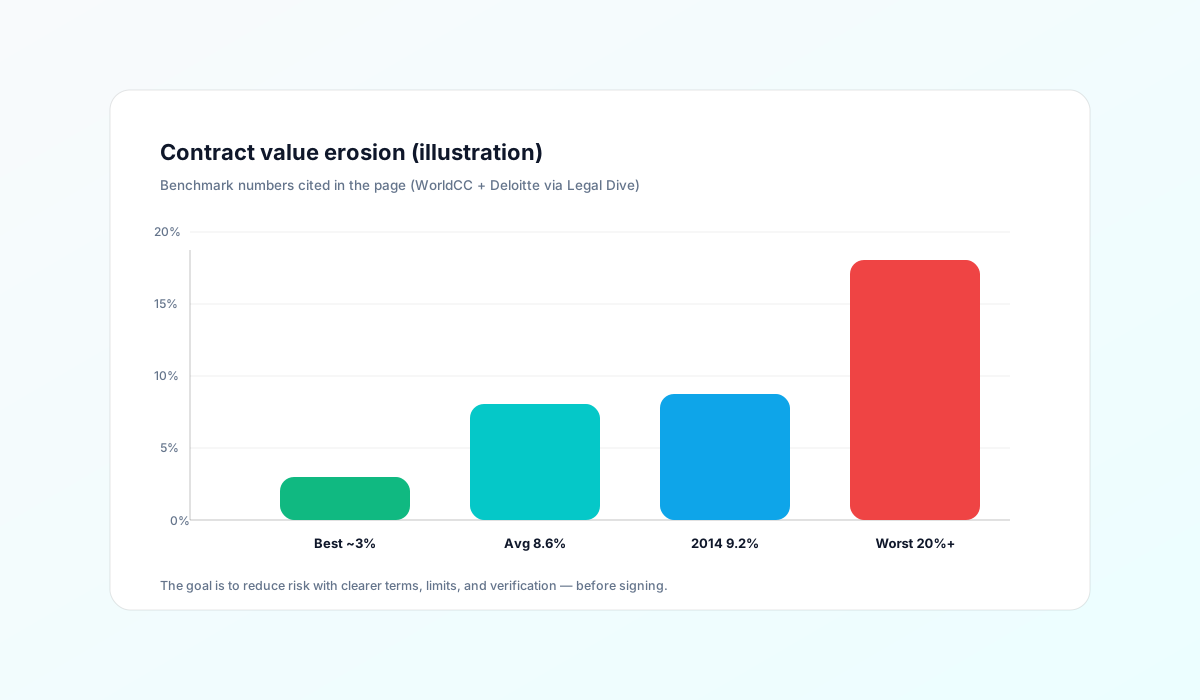
Related stats (business contracts)
Sources: Docusign / Deloitte signals reported by TechRadar and Axios. Treat these as directional business benchmarks, not legal advice.
Why it's risky (specific outcomes)
- A $100,000 project can shift to a $50,000 option if 'assignment' is triggered.
- $25,000 in initial fees can be converted into an exclusive assignment that reduces the final payout by 30%.
- The net profit margin drops from $150,000 to $50,000 if the assigned rights are transferred.
- Assignment of Intellectual Property (IP) rights.
- Choice of Assignment clauses in 'Substantive' vs. 'Exclusive' language.
- Indemnification scope defined by assignment.
- The assignment clause dictates which team gets to control the deliverables, dictating workflow approvals and necessary resource allocation.
- It locks down operational decision-making power, meaning your team must align with the assigned party's process for critical tasks.
- Workflow bottleneck: If the assignee has a stricter approval process than you, it stalls essential day-to-day execution.
- Loss of strategic leverage over future business decisions.
- Reputational risk if the assignment is deemed unfavorable to the original contractor.
- Long-term operational dependency established by the assignment dictates ongoing service quality.
Risk detection board
Red flags to look for
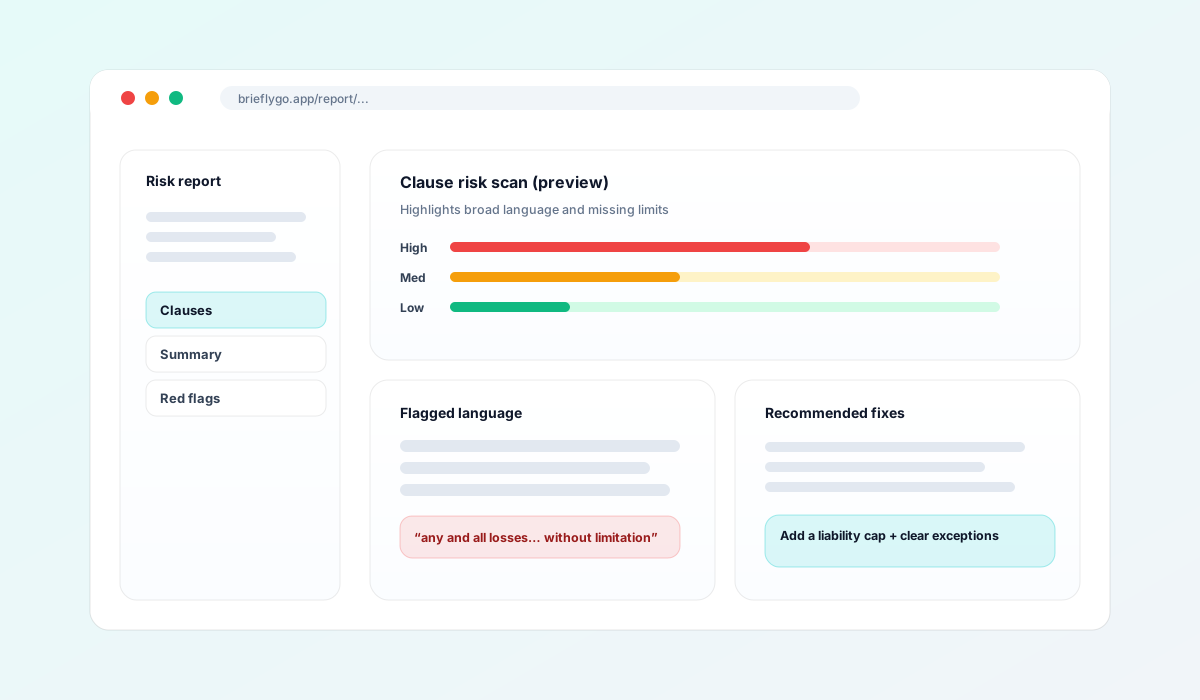
Search for these patterns first. They usually signal hidden cost, one-sided leverage, or a clause that needs a tighter limit before signing.
'Assignment', 'hereby assigns', 'to the exclusive benefit of', 'without reservation', 'subrogation clause', 'in lieu of']
Ask for a limit, a definition, and a written notice/dispute window.
example_who
Ask for a limit, a definition, and a written notice/dispute window.
:
Ask for a limit, a definition, and a written notice/dispute window.
A solo freelance web developer signing a 12-month project contract with a tech company.
Ask for a limit, a definition, and a written notice/dispute window.
example_signed
Ask for a limit, a definition, and a written notice/dispute window.
A small design firm signing a Master Services Agreement (MSA) where the assignment clause dictates that the client assigns the underlying software/deliverables to them.
Ask for a limit, a definition, and a written notice/dispute window.
example_went_wrong
Ask for a limit, a definition, and a written notice/dispute window.
The problem arises when the 'assignment' section states that all deliverables are assigned to the Client, meaning your original deliverable rights are completely overwritten.
Ask for a limit, a definition, and a written notice/dispute window.
example_lost
Ask for a limit, a definition, and a written notice/dispute window.
The specific outcome is losing $150,000 in potential revenue because the contract specified assignment of key IP/work product to the client.
Ask for a limit, a definition, and a written notice/dispute window.
Scenario replay
Real example: what you can lose
A practical mini-story makes the risk easier to judge than abstract legal wording.
Potential impact
they paid an extra fee and lost time renegotiating after signingThis is the kind of loss BrieflyGo tries to surface before the document moves to signing.
Who
A buyer
Signed
a "standard" contract without reading the boilerplate
Trigger
a small issue happened and the other side used broad wording to deny flexibility
Manual scan mode
How to identify it
Use this as a quick search workflow before uploading the contract or asking the other side for changes.
Where to look
General terms,Definitions,Remedies,Notices,Amendments
Phrases to search
sole discretionincluding but not limited tosurvive terminationentire agreementamend at any timeDanger pattern
- Definitions are broad.
- Cross-references hide key terms.
- One side can change terms unilaterally.
Redline helper
Risky wording vs safer wording
"Company may change these terms, remedies, fees, or obligations at any time in its sole discretion."
"Any material change must be in writing, signed by both parties, and will not apply retroactively to work already ordered or delivered."
Why this helps: This keeps the contract stable and prevents one-sided changes after signing.
Action board
How to protect yourself
Treat these as practical redline moves: narrow the language, add measurable limits, then re-check the edited document before you sign.
Add a change control process for amendments (written, signed, mutual).
Ask for this change in writing, then verify the final PDF matches the negotiated wording.
Require objective standards for "reasonable" or "material".
Ask for this change in writing, then verify the final PDF matches the negotiated wording.
Move key terms from attachments into the main body.
Ask for this change in writing, then verify the final PDF matches the negotiated wording.
Negotiate: ask for a narrower scope and clear definitions.
Ask for this change in writing, then verify the final PDF matches the negotiated wording.
Knowledge graph
Legal terms and document paths connected to Assignment Clause
This connected layer helps readers and answer engines move from the risky clause itself to nearby glossary explanations and document workflows where the same pressure shows up again.
Upload your contract and detect contract risks instantly using AI.
BrieflyGo scans contracts and highlights risky wording in plain English so you can decide what to accept, what to negotiate, and what to avoid.
No legal jargon overload. Fast scan. Clear red flags.
FAQ
Is this type of clause legal?
Often yes - but legality depends on your location, the exact wording, and the context. Even a legal clause can still be a bad deal for you.
Can it be changed in the draft?
Yes, many clauses can be removed or narrowed. If the other side won't remove it, ask for limits, exceptions, or a trade-off (price, term, scope).
Who benefits from it?
Usually the party with more power in the negotiation. The clause often shifts risk away from them and onto you, especially when it's broad or one-sided.
When does it become dangerous?
When it's broad, has no clear limits, applies after termination, or is tied to large money. It's also risky when the contract has vague definitions or hidden cross-references.