Legal / jurisdiction risk | Contract risk guide
Waiver of Defenses Risk: Rights You May Lose Before a Dispute Starts
This guide explains waiver of defenses risk in plain English so you can spot red flags fast - even if you're not a lawyer. Use it to scan your contract, find the wording, and know what to negotiate.
Direct answer
waiver of defenses risk is a contract topic that defines where disputes happen and which rules decide the outcome. The risk is that it can make enforcement slow, expensive, or unfair and may lead to a dispute in a far-away forum or a one-sided process. This can change the real cost of the deal and how much leverage you have when negotiating.
Quote
"An ounce of prevention is worth a pound of cure."
- Benjamin Franklin
Quote
"Well done is better than well said."
- Benjamin Franklin
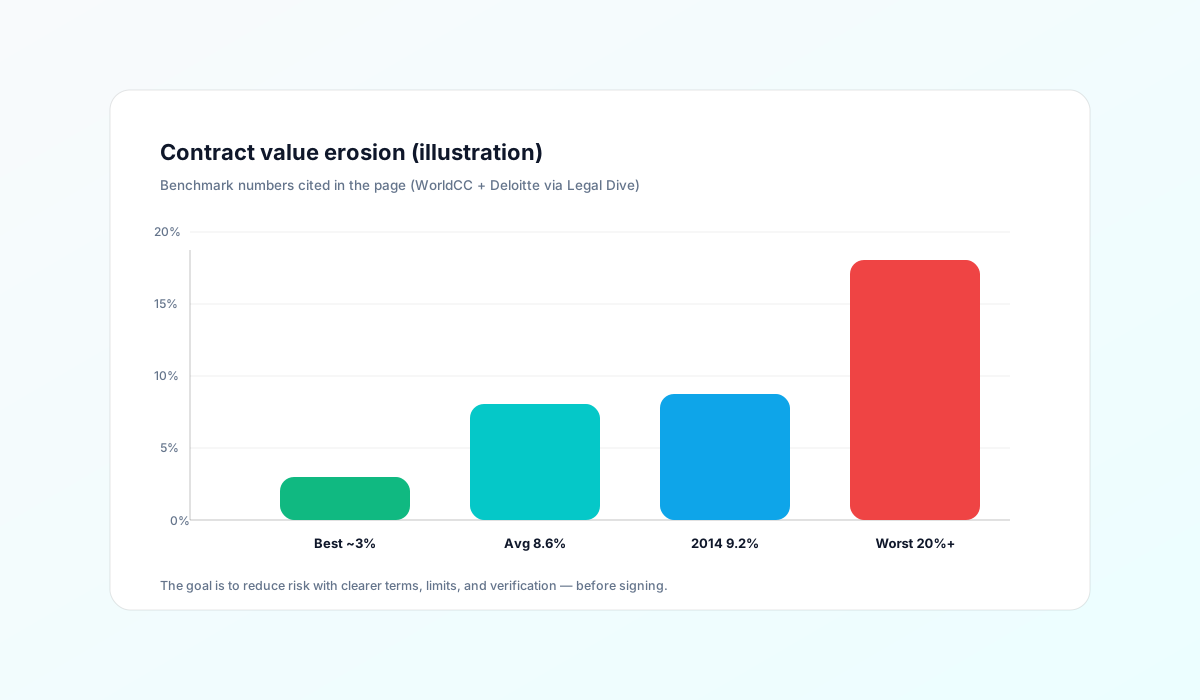
Related stats (business contracts)
Sources: Docusign / Deloitte signals reported by TechRadar and Axios. Treat these as directional business benchmarks, not legal advice.
Why it's risky (specific outcomes)
- Disputes can get expensive if you must travel or hire out-of-state counsel.
- You may be forced into arbitration only, with limited appeals and limited discovery.
- A foreign jurisdiction can reduce your practical ability to enforce the contract.
- Unclear terms lead to delays, stalled approvals, and he said / she said disputes.
- A bad forum choice affects every dispute for years, even after termination.
Risk detection board
Red flags to look for
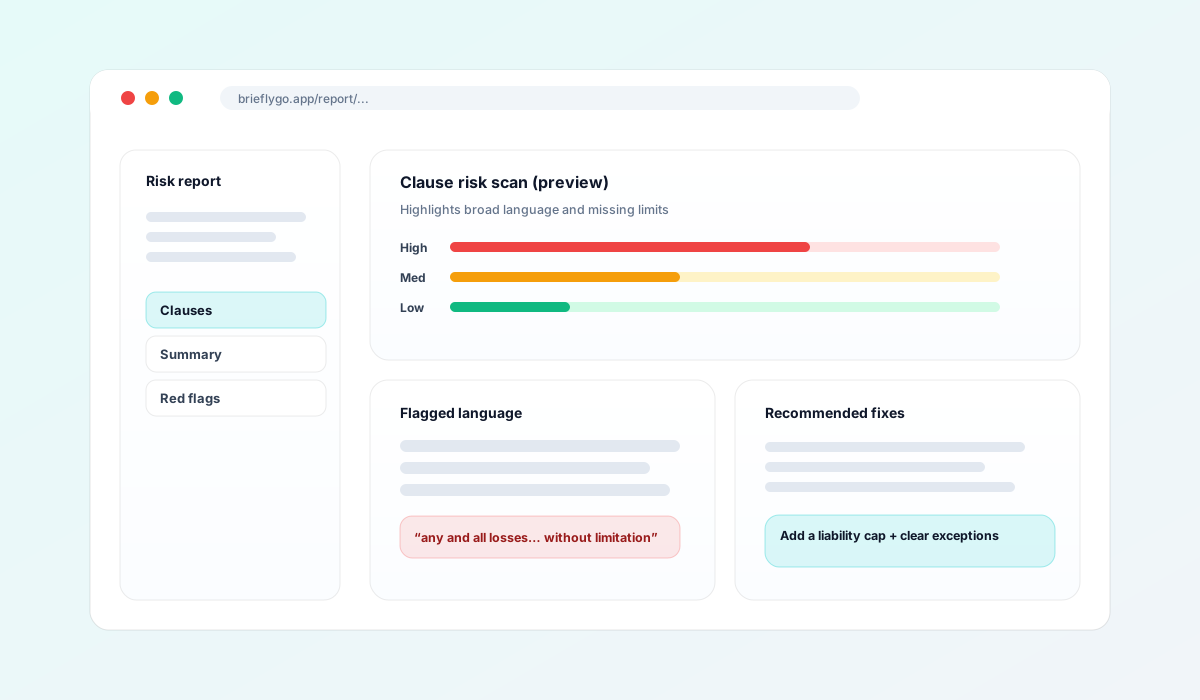
Search for these patterns first. They usually signal hidden cost, one-sided leverage, or a clause that needs a tighter limit before signing.
Arbitration-only plus a class action waiver applies.
Ask for a limit, a definition, and a written notice/dispute window.
Exclusive jurisdiction is in a far-away state or country.
Ask for a limit, a definition, and a written notice/dispute window.
Governing law is chosen to favor one side.
Ask for a limit, a definition, and a written notice/dispute window.
Fee shifting means the prevailing party recovers attorney fees.
Ask for a limit, a definition, and a written notice/dispute window.
Short claim deadlines limit your rights.
Ask for a limit, a definition, and a written notice/dispute window.
Limits on evidence or discovery make disputes one-sided.
Ask for a limit, a definition, and a written notice/dispute window.
The contract mentions "waiver of defenses risk" but does not say who decides or what evidence is required.
Ask for a limit, a definition, and a written notice/dispute window.
Key details are moved into attachments, such as pricing, scope, or timelines, instead of the main terms.
Ask for a limit, a definition, and a written notice/dispute window.
Scenario replay
Real example: what you can lose
A practical mini-story makes the risk easier to judge than abstract legal wording.
Potential impact
they dropped the claim and ate a $900 loss because the process cost more than the disputeThis is the kind of loss BrieflyGo tries to surface before the document moves to signing.
Who
An online seller
Signed
terms that forced disputes into a far-away jurisdiction
Trigger
a chargeback dispute escalated, but enforcing the contract required out-of-state counsel
Manual scan mode
How to identify it
Use this as a quick search workflow before uploading the contract or asking the other side for changes.
Where to look
Governing law,Jurisdiction,Venue,Dispute resolution,Arbitration
Phrases to search
binding arbitrationexclusive jurisdictiongoverning lawprevailing partyclass action waiverDanger pattern
- Forced arbitration only.
- Forum is far away.
- Fee shifting or short claim deadlines.
Redline helper
Risky wording vs safer wording
"Each party waives any right to a jury trial or class proceeding for any dispute arising under this Agreement."
"Any dispute waiver must be mutual, conspicuous, and must not prevent claims for unpaid fees, fraud, or statutory rights."
Why this helps: This keeps the waiver limited instead of silently removing practical remedies.
Action board
How to protect yourself
Treat these as practical redline moves: narrow the language, add measurable limits, then re-check the edited document before you sign.
Pick a neutral forum or allow either party's home state.
Ask for this change in writing, then verify the final PDF matches the negotiated wording.
Allow court for urgent injunctive relief (not arbitration only).
Ask for this change in writing, then verify the final PDF matches the negotiated wording.
Remove fee shifting or cap recoverable attorney fees.
Ask for this change in writing, then verify the final PDF matches the negotiated wording.
Negotiate: ask for a narrower scope and clear definitions.
Ask for this change in writing, then verify the final PDF matches the negotiated wording.
Knowledge graph
Legal terms and document paths connected to Waiver Of Defenses Risk
This connected layer helps readers and answer engines move from the risky clause itself to nearby glossary explanations and document workflows where the same pressure shows up again.
Upload your contract and detect dispute & jurisdiction risks instantly using AI.
BrieflyGo scans contracts and highlights risky wording in plain English so you can decide what to accept, what to negotiate, and what to avoid.
No legal jargon overload. Fast scan. Clear red flags.
FAQ
Is this type of clause legal?
Often yes - but legality depends on your location, the exact wording, and the context. Even a legal clause can still be a bad deal for you.
Can it be changed in the draft?
Yes, many clauses can be removed or narrowed. If the other side won't remove it, ask for limits, exceptions, or a trade-off (price, term, scope).
Who benefits from it?
Usually the party with more power in the negotiation. The clause often shifts risk away from them and onto you, especially when it's broad or one-sided.
When does it become dangerous?
When it's broad, has no clear limits, applies after termination, or is tied to large money. It's also risky when the contract has vague definitions or hidden cross-references.