IP / data / confidentiality risk | Contract risk guide
AI Training Data Clause Risk: Can Your Content Train a Model?
This guide explains AI training data clause risk in plain English so you can spot red flags fast - even if you're not a lawyer. Use it to scan your contract, find the wording, and know what to negotiate.
Direct answer
AI training data clause risk is a contract topic that defines who owns the work and how data/confidential information can be used. The risk is that it can hand over ownership or create data liability and may lead to loss of rights, breach claims, or expensive compliance work. This can change the real cost of the deal and how much leverage you have when negotiating.
Answer for your situation
Can a vendor use my data to train an AI model?
Only the contract can answer that. Look for permissions covering prompts, inputs, outputs, telemetry, de-identified data, affiliates, and model improvement. If training is not intended, the restriction should be explicit.
General information, not legal advice. The exact wording and local law can change the outcome.
Quote
"The bitterness of poor quality remains long after the sweetness of low price is forgotten."
- Benjamin Franklin (attributed)
Quote
"Risk comes from not knowing what you are doing."
- Warren Buffett
Source: Investopedia
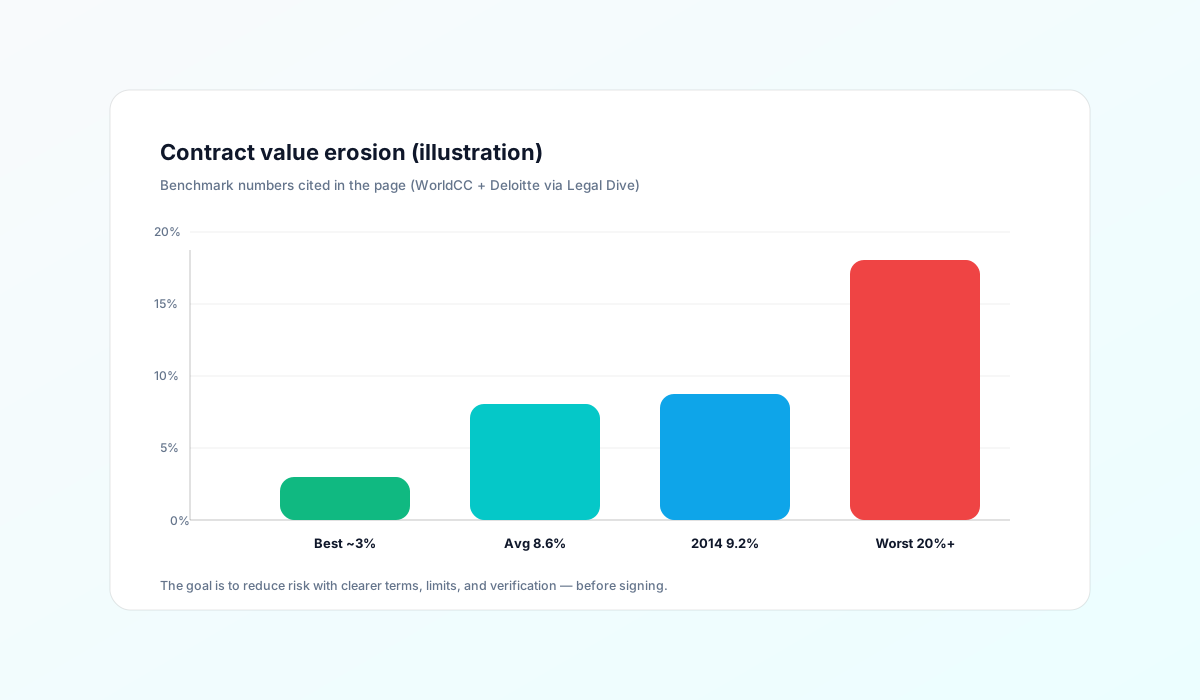
Related stats (business contracts)
Sources: Docusign / Deloitte signals reported by TechRadar and Axios. Treat these as directional business benchmarks, not legal advice.
Why it's risky (specific outcomes)
- A data incident can trigger refund demands, penalties, or breach response costs.
- You may assign away IP or grant a broad license to your work by accident.
- Overbroad confidentiality scope can make normal work a breach risk.
- Security and compliance obligations can require audits, logging, or reporting.
- Confidentiality and IP clauses often survive, limiting reuse of your own work.
Risk detection board
Red flags to look for
Search for these patterns first. They usually signal hidden cost, one-sided leverage, or a clause that needs a tighter limit before signing.
"Confidential information" is defined as everything, with few carve-outs.
Ask for a limit, a definition, and a written notice/dispute window.
IP assignment includes your background tools, templates, or libraries.
Ask for a limit, a definition, and a written notice/dispute window.
Data processing or security obligations are vague but penalties are strict.
Ask for a limit, a definition, and a written notice/dispute window.
They can share data with affiliates or partners without controls.
Ask for a limit, a definition, and a written notice/dispute window.
Breach notice windows are unrealistic.
Ask for a limit, a definition, and a written notice/dispute window.
Survival is long or perpetual without a clear end date.
Ask for a limit, a definition, and a written notice/dispute window.
Data security obligations are vague but penalties are strict.
Ask for a limit, a definition, and a written notice/dispute window.
The contract mentions "AI training data clause risk" but does not say who decides or what evidence is required.
Ask for a limit, a definition, and a written notice/dispute window.
Key details are moved into attachments, such as pricing, scope, or timelines, instead of the main terms.
Ask for a limit, a definition, and a written notice/dispute window.
Scenario replay
Real example: what you can lose
A practical mini-story makes the risk easier to judge than abstract legal wording.
Potential impact
they had to rebuild assets and lost about 20 hours of reusable workThis is the kind of loss BrieflyGo tries to surface before the document moves to signing.
Who
A designer
Signed
a work agreement where "all work product" transferred to the client
Trigger
the clause also captured their reusable templates and tools
Manual scan mode
How to identify it
Use this as a quick search workflow before uploading the contract or asking the other side for changes.
Where to look
Confidentiality,Data protection,Security,IP ownership,Work product
Phrases to search
confidential informationwork productIP assignmentdata breachaffiliatesDanger pattern
- IP transfer includes background materials.
- Broad confidential definition with few carve-outs.
- Strict breach notice timelines with big penalties.
Redline helper
Risky wording vs safer wording
"Provider may use Customer content, prompts, outputs, and related data to improve, train, or develop artificial intelligence systems."
"Provider may not use Customer content, prompts, outputs, or confidential information to train models without separate written consent."
Why this helps: This gives a clear boundary around AI training, confidential inputs, and reuse of customer data.
Action board
How to protect yourself
Treat these as practical redline moves: narrow the language, add measurable limits, then re-check the edited document before you sign.
Keep background IP: license only what the other side needs.
Ask for this change in writing, then verify the final PDF matches the negotiated wording.
Limit "confidential" to specific categories + add public/known carve-outs.
Ask for this change in writing, then verify the final PDF matches the negotiated wording.
Define security controls and limit liability for indirect losses.
Ask for this change in writing, then verify the final PDF matches the negotiated wording.
Negotiate: ask for a narrower scope and clear definitions.
Ask for this change in writing, then verify the final PDF matches the negotiated wording.
Knowledge graph
Legal terms and document paths connected to AI Training Data Clause Risk
This connected layer helps readers and answer engines move from the risky clause itself to nearby glossary explanations and document workflows where the same pressure shows up again.
Upload your contract and detect IP & data risks instantly using AI.
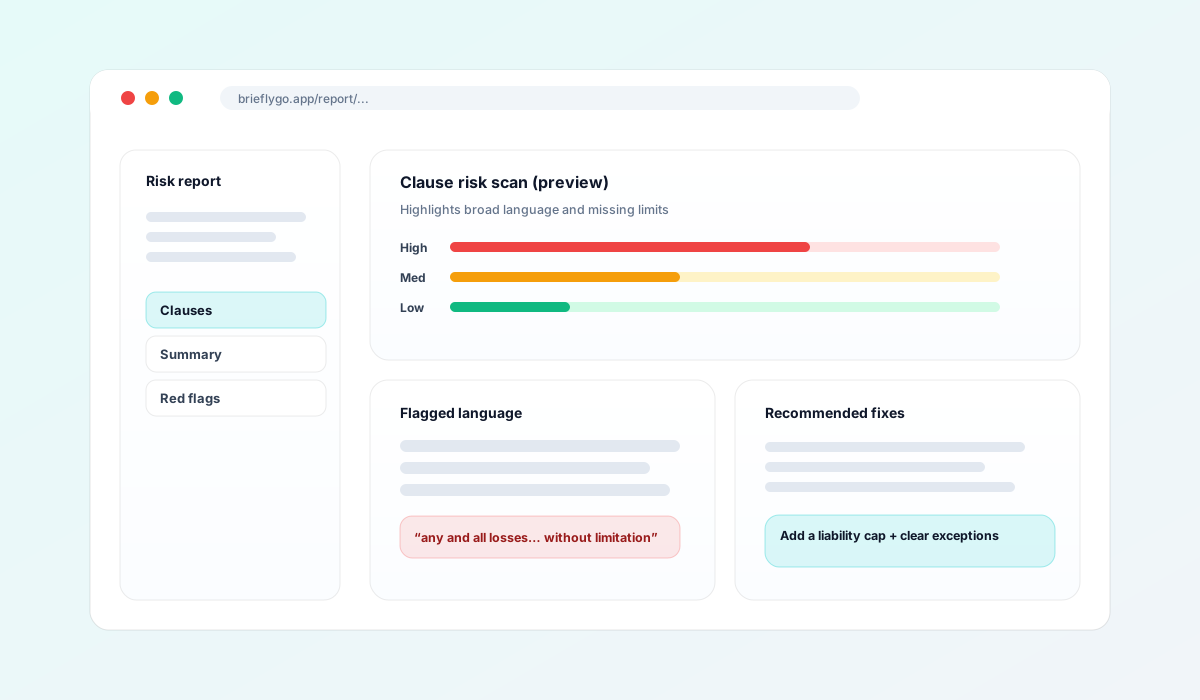
BrieflyGo scans contracts and highlights risky wording in plain English so you can decide what to accept, what to negotiate, and what to avoid.
No legal jargon overload. Fast scan. Clear red flags.
FAQ
Is this type of clause legal?
Often yes - but legality depends on your location, the exact wording, and the context. Even a legal clause can still be a bad deal for you.
Can it be changed in the draft?
Yes, many clauses can be removed or narrowed. If the other side won't remove it, ask for limits, exceptions, or a trade-off (price, term, scope).
Who benefits from it?
Usually the party with more power in the negotiation. The clause often shifts risk away from them and onto you, especially when it's broad or one-sided.
When does it become dangerous?
When it's broad, has no clear limits, applies after termination, or is tied to large money. It's also risky when the contract has vague definitions or hidden cross-references.